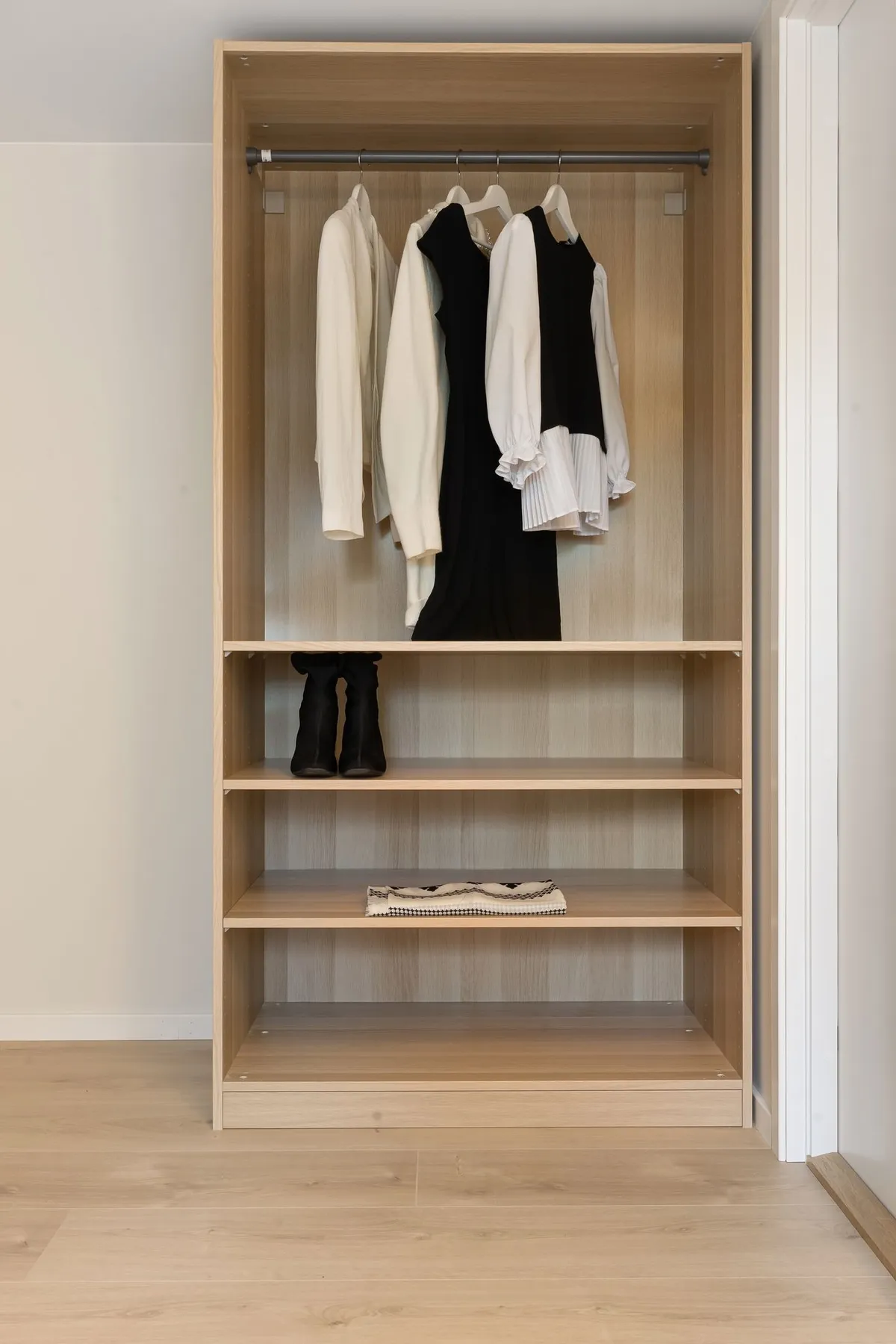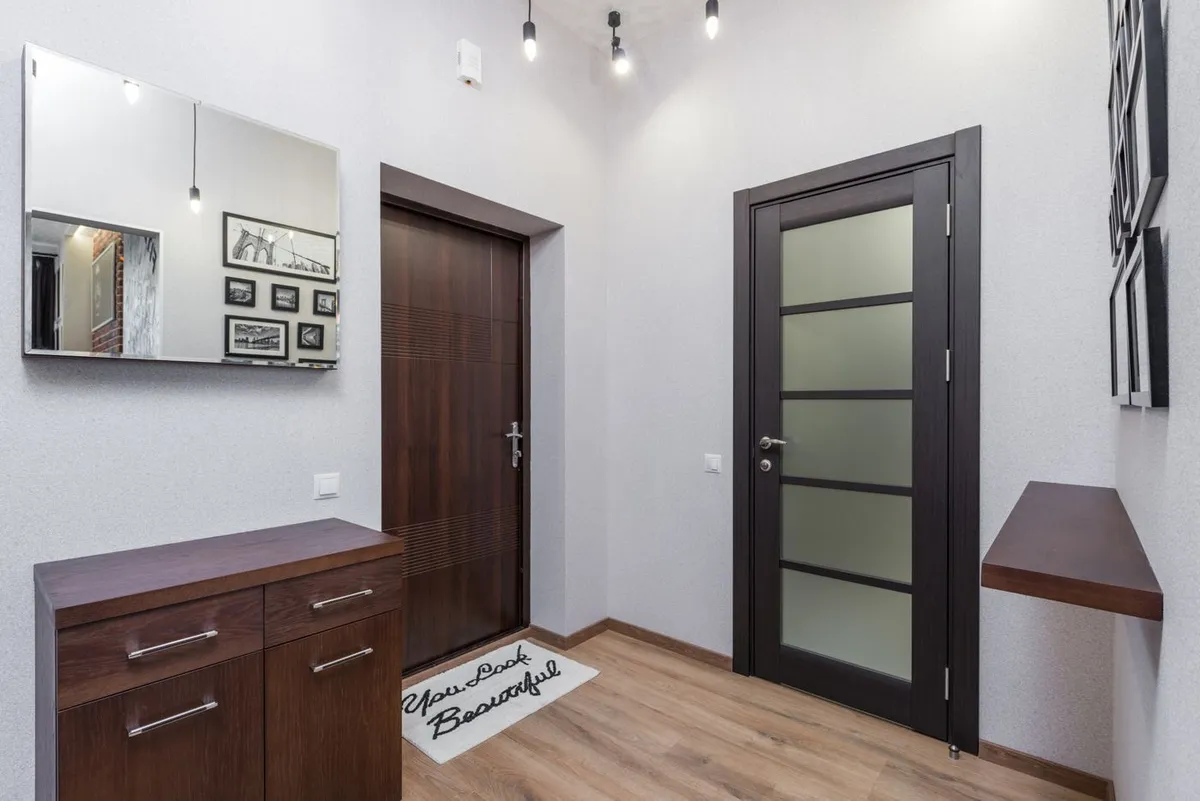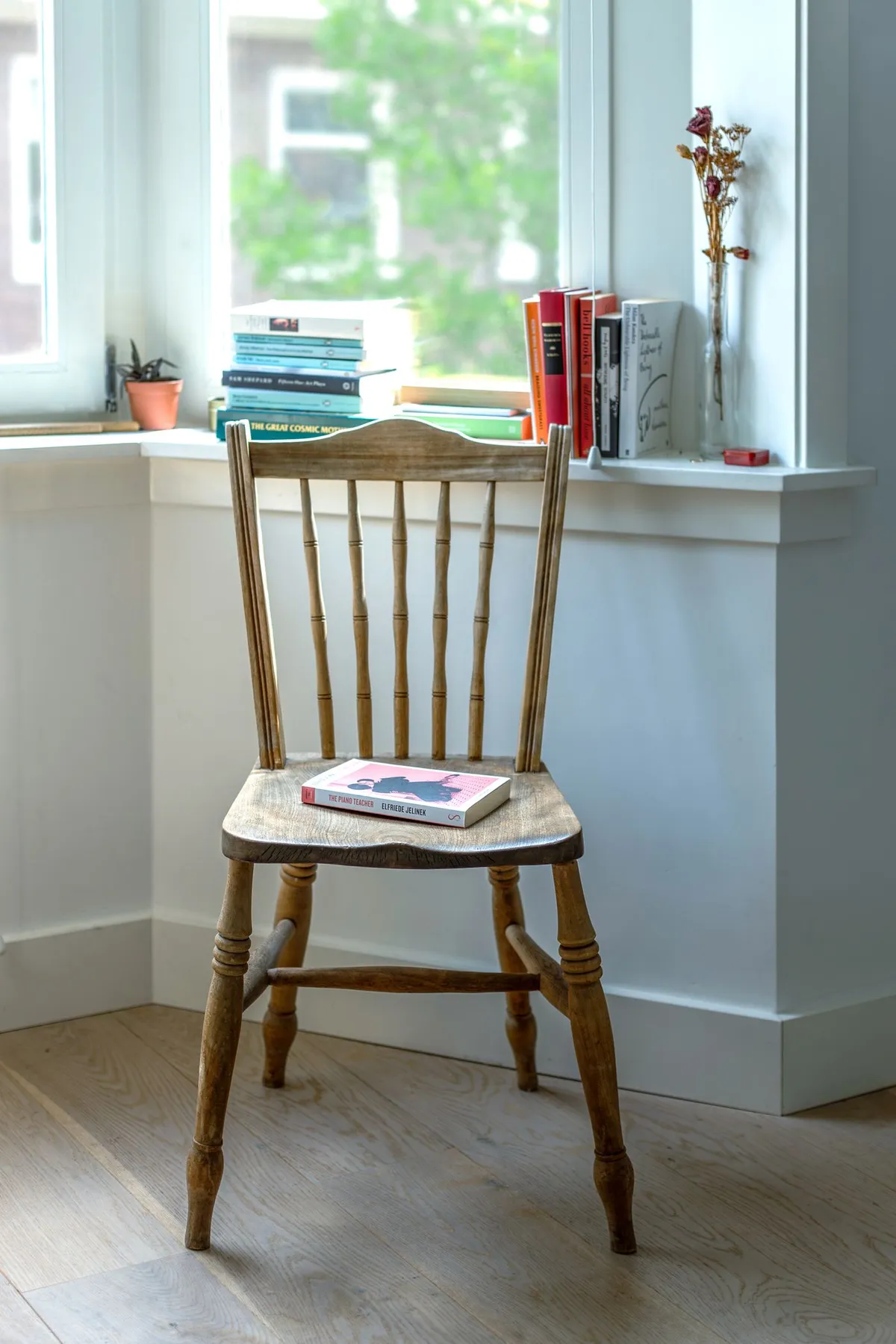
You would like somewhere to read for twenty minutes before bed, but the bedroom already holds a wardrobe, a desk and a laundry basket. The tempting solution is to order a beautiful chair and work out the rest later. In a small room, start with the evening you want to have and the space it can realistically occupy.
A reading corner can be modest: a comfortable existing seat, a light positioned for the page and somewhere to put the current book. It does not require a separate library or a stack of decorative objects. The best arrangement gives reading an easy starting point without making the rest of the bedroom difficult to use.
Map the space while the room is in use
Measure the possible location, then open wardrobe doors, drawers and the bedroom door as you normally would. Include the routes you take carrying laundry or getting dressed. Furniture can fit inside a measured rectangle while still making daily movement awkward. Mark the proposed footprint with removable tape if the floor surface allows it.
Check the position of sockets and the route a lamp cable would need to take. Keep cables away from walking routes and follow the electrical product’s instructions. A corner that looks empty may be a poor choice if it places a chair in front of frequently used storage or depends on an inconvenient power arrangement.
Try the location with a chair you already own for several evenings. Notice whether you naturally settle there, whether the seat suits the length of your reading session and where your feet land. This small trial can reveal that a cushion on an existing bench is enough, or that the proposed corner simply feels too crowded.
Choose the seat for the way you sit
If buying a chair, compare the seat height, depth, width and overall dimensions rather than judging only the silhouette. Someone who prefers sitting upright may want a different shape from someone who curls up with a book. Armrests can be useful, but they also add width. A compact footprint does not guarantee a comfortable seat.
Where possible, sit in the chair before purchasing. Otherwise, examine the dimensions and return conditions carefully, including any assembly or return-transport requirements. Compare upholstery care instructions with your household’s needs. A removable cover may be convenient, but check the stated washing method rather than assuming it can go into your usual laundry load.
Give the page its own light
Look for a lamp that can be positioned to illuminate the book without obstructing the seat or the route around it. An adjustable shade or arm may help you direct the light. Check the product’s bulb compatibility, controls, dimensions and installation requirements. Consider how easy the switch will be to reach once you are sitting down.
Try the arrangement in the evening, when you actually plan to read. A daylight photograph will not tell you whether a shade creates an inconvenient shadow on the page. If another person uses the room, consider where the light falls from their side too. Follow manufacturer guidance on placement and keep textiles clear of fixtures as instructed.
Buying checklist
- Measure furniture footprints and door or drawer clearance.
- Test the intended position with an existing seat.
- Compare seat measurements and upholstery care instructions.
- Check lamp controls, bulb requirements and cable routing.
- Choose storage for the current book rather than every book you own.
- Review delivery, assembly and returns before ordering.
IKEA can be a useful starting point for comparing compact chairs, lamps and small tables. Use its current product information to check dimensions and care requirements. Photograph your room measurements before browsing so a larger, more dramatic option does not quietly replace the practical size you set out to find.
Tradeoffs
A side table keeps a drink and book close, but may be unnecessary if an existing shelf is reachable. A chair with a deep seat can feel inviting while taking up too much clearance. Wall-mounted lighting may save floor space, but installation and tenancy rules need consideration. A freestanding lamp is easier to move and still needs a safe, workable footprint.
Finish with the things that support the habit: the book you are reading, perhaps a small blanket and a place to return them. Keep unrelated storage out of the seat so it remains available. If the corner becomes a clothes pile every evening, adjust where those clothes belong. The goal is a usable invitation to sit down, not another area to maintain.