An afternoon is enough time to make a closet easier to use, but it is not always enough to make every wardrobe decision. The distinction matters. Organization is about giving belongings a useful place; an audit asks whether they belong in your life at all. Trying to do both perfectly can leave a bed covered with clothes when you need to sleep.
Set a modest goal: make the current season visible, group the items you use together, and create a manageable place for anything that needs repair or a later decision. You can improve the closet without ordering a coordinated set of boxes first.
First thirty minutes: define the boundaries
Choose one closet or one clearly defined section. Gather a few existing bags or boxes for laundry, repairs and items you are confident you will pass on. Keep uncertain pieces separate rather than forcing a decision while the whole room is unsettled.
Take a quick photograph if it helps you remember where shelves and hanging space were crowded. You do not need to empty every drawer at once. Work through a section, clean the accessible surface, then return what belongs there before starting the next. This keeps the project contained if you have to stop early.
Group clothes by how you retrieve them
Organize in a way that reflects your mornings. If you choose trousers first, give them a visible section. If work clothes and weekend clothes are distinct in your life, separate those groups. A strict color order can look appealing but may be less useful if it mixes several different functions together.
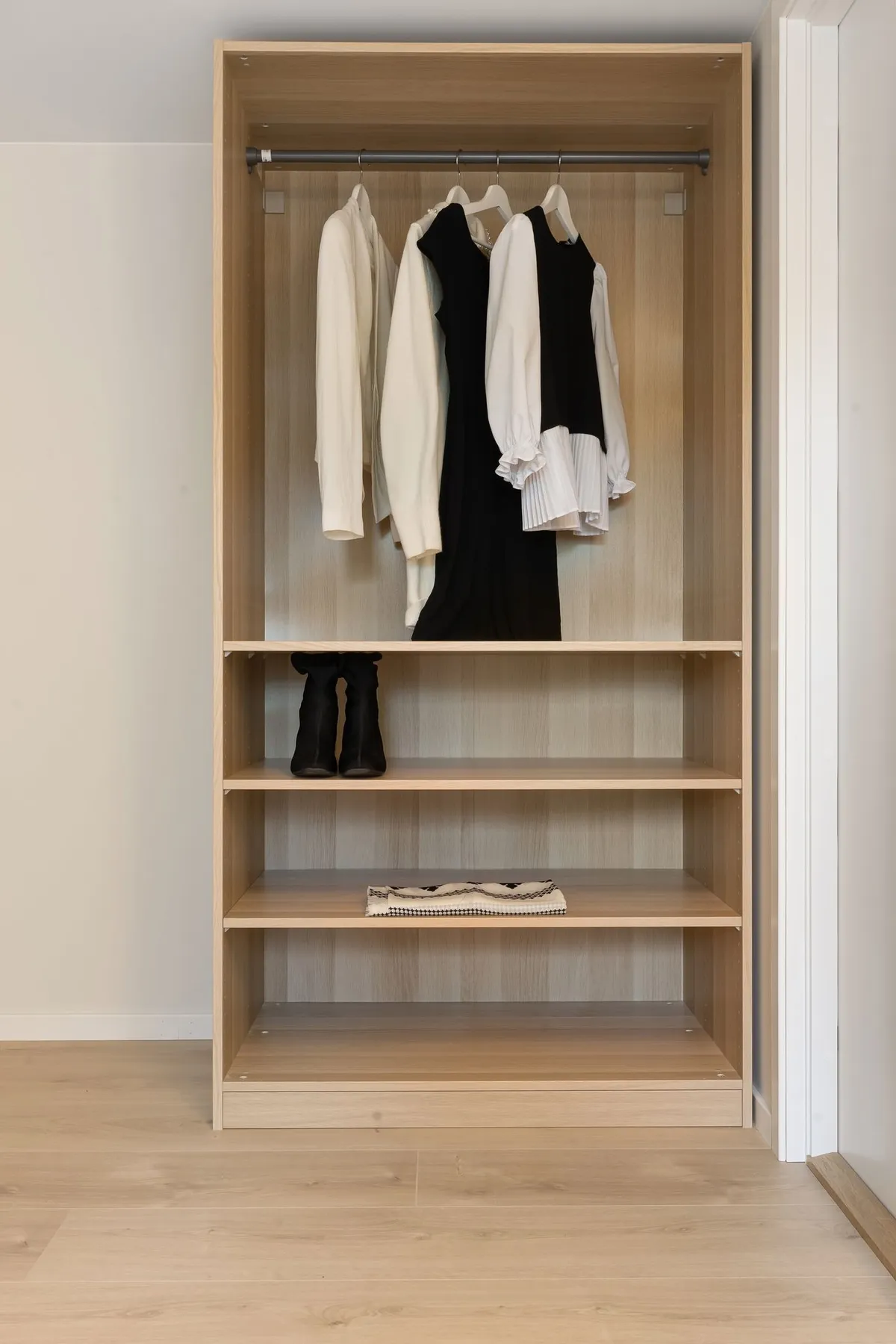
Keep frequently worn pieces within easy reach. Move occasional formalwear or off-season items to a less convenient area where your space permits. Avoid overcrowding hanging rails: when you cannot slide garments apart, finding one item can pull several others out of place.
Use the garment’s care guidance when deciding whether to hang or fold. Some knits are better stored folded rather than left to stretch on a hanger, while structured pieces may benefit from appropriate support. Do not assume one hanger or storage method suits every fabric and construction.
Make drawers easier to read
For everyday tees or base layers, folding into visible rows may help you see what you have without lifting a stack. Try it in one drawer first. If a different method is easier for your household to maintain, use that instead. Organization should not require a complicated folding ceremony every laundry day.
Use existing shallow boxes as dividers where they fit neatly. They can keep socks or small accessories from spreading across a drawer. Measure before buying inserts, including the usable height and the space needed for the drawer to close.
Give unfinished tasks their own place
Put missing buttons, alterations and repairs together in a small, defined area. Add a note about what each item needs so the problem remains clear later. A repair pile with no next step tends to become permanent storage.
Choose a realistic follow-up: repair one button this week, book an alteration, or decide whether an item is worth the cost. Keep returns separate and check their deadlines. Do not hide time-sensitive tasks at the back of a shelf simply because the closet now looks tidier.
Preparation checklist
- Reserve a finishing period before the afternoon ends so the bed and floor are clear.
- Gather laundry, repair and donation containers you already own.
- Work in sections rather than emptying the entire room.
- Keep current, frequently worn items accessible.
- Label uncertain or repair items with a concrete next action.
- Remove outgoing items from the closet so they do not rejoin the rotation.
Buying checklist
Only buy storage after the clothes have returned to their useful positions. Measure remaining gaps and compare them with the dimensions of any bins or dividers. Check weight limits for shelves and hanging additions. Skip matching containers where a simple existing box already performs the job.
Tradeoffs
Open shelves make items visible but can expose them to dust. Closed bins can protect and contain belongings while making them easier to forget. Dense storage increases capacity but often makes daily retrieval more difficult. Choose accessibility for the things you use most and reserve compact storage for things you need less often.
Finish by selecting tomorrow’s outfit from the new arrangement. If you can find the pieces and return rejected options without creating another pile, the afternoon has accomplished its purpose. A useful closet is a working system, not a display that nobody is allowed to disturb.