Friends are coming for dinner, and your cupboard contains ordinary plates rather than a coordinated hosting collection. That is enough to start. A casual table should make it easy to sit, eat and talk; it does not need to imitate a restaurant or turn a simple meal into a shopping deadline.
Decide what you will serve before arranging the table. Shared dishes need space in the middle. Individual plates need a clear place to land. Once the practical layout works, one small decorative detail can make the meal feel considered without crowding the food.
Begin with seats and elbow room
Put the chairs around the table and check how people will move in and out. A place setting that looks spacious from above can feel cramped when everyone sits down. If the table is small, reduce the number of objects at each seat rather than adding a charger plate beneath an ordinary plate.
Make room for serving utensils and any dishes that will stay on the table. Place items used only once elsewhere until needed. A dessert bowl does not have to sit at every place throughout dinner if it occupies space needed for the main meal.
If a guest has access needs, ask what would make the arrangement comfortable instead of assuming the usual seating works. The table should accommodate the people attending, not the other way around.
Use everyday dishes deliberately
Mismatched dishes can feel coherent when you repeat a simple pattern. Use the same type of plate at each seat if you have enough, or alternate two familiar styles. Keep the rest of the setting uncomplicated so the differences do not become a problem you are trying to disguise.
Choose glasses for the drinks you are actually offering. Guests do not need three different vessels at the start of a meal when one will do. Check that fragile or special pieces are appropriate for the occasion and follow their care instructions afterward.
Place the cutlery required for the meal within easy reach. A casual dinner does not require utensils for courses you are not serving. Set out extras nearby if a shared dish may need a spoon or someone prefers a different tool.
Let cloth do one useful job
An existing tablecloth, runner or placemat can protect the table where its material is suitable and add a little texture. Check the drop of a cloth against the chairs so it does not gather in laps. A runner is optional; if it reduces the stable space for serving dishes, leave the table bare and use appropriate protective mats under hot items.
Cloth napkins can be pleasant if you own them and have time to wash them. Paper napkins are also a practical choice. Fold either simply and place them where guests can find them. Elaborate folds tend to take time while offering little help during an ordinary meal.
Keep the center low and movable
A small vase, a bowl of fruit or a few branches can supply a finishing detail. Check sightlines while seated. A tall arrangement that prevents conversation is working against the purpose of the table.
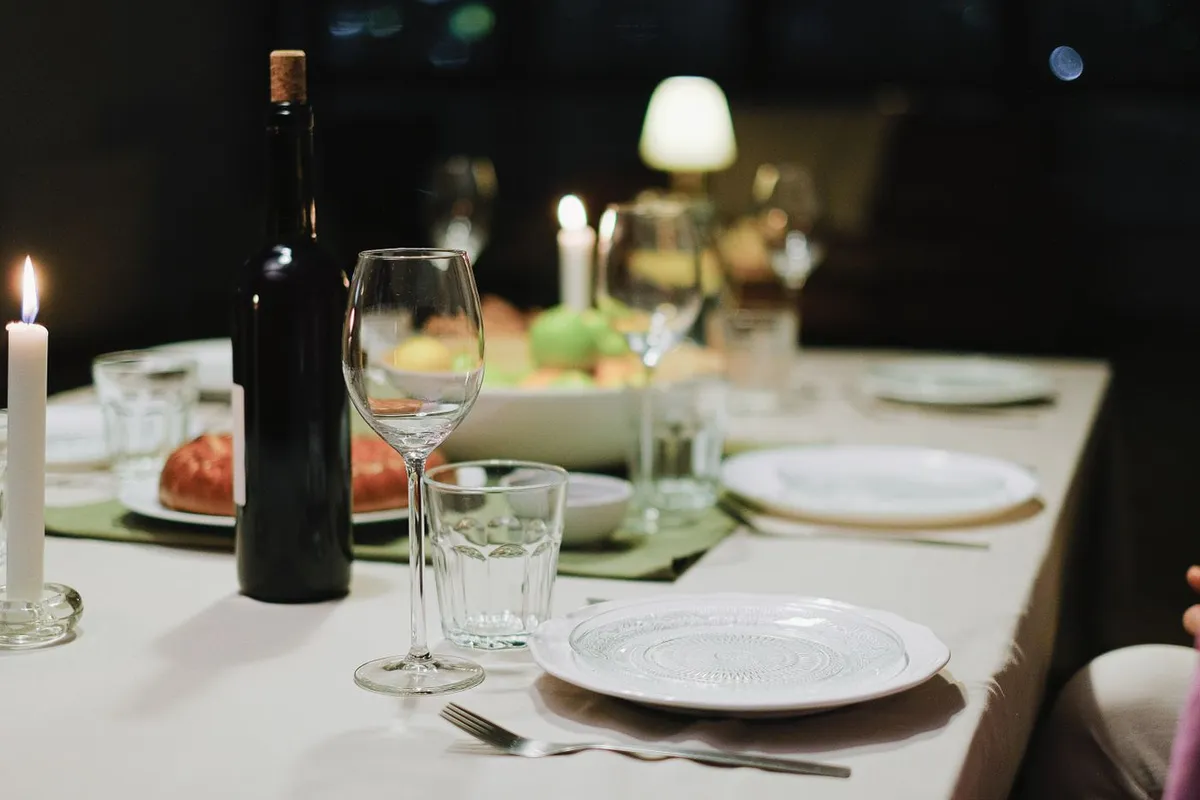
If you use candles, follow their safety instructions and keep them away from fabrics, flowers and other flammable materials. Consider whether an unlit decorative candle or another detail is more suitable for the household. Strong fragrances may compete with the meal, so choose an unobtrusive arrangement.
Preparation checklist
- Count seats, plates, glasses and the cutlery needed for the actual menu.
- Lay out serving dishes empty to check the space before food is ready.
- Leave a safe place for hot dishes with suitable protection underneath.
- Check that guests can see each other across the table.
- Keep water, spare napkins and extra utensils easy to reach.
- Clear unrelated paperwork and belongings before setting anything decorative down.
Buying checklist
If you repeatedly host more people than your everyday dishes accommodate, consider a few durable extra pieces rather than replacing the entire set. Check dimensions, material care and any dishwasher or heat-use guidance. Skip decorations that need to be removed as soon as dinner starts.
Tradeoffs
A fully set table looks welcoming on arrival but leaves less room for shared food. A simpler setting may feel less formal while making conversation and passing dishes easier. Cloth brings texture and laundry; paper brings convenience and waste. Choose intentionally without making dinner depend on a perfect answer to every detail.
The most generous table is one where people can settle in. Once the plates, food and people fit comfortably, stop adding things. Your time is better spent finishing the meal and being available when your guests arrive.