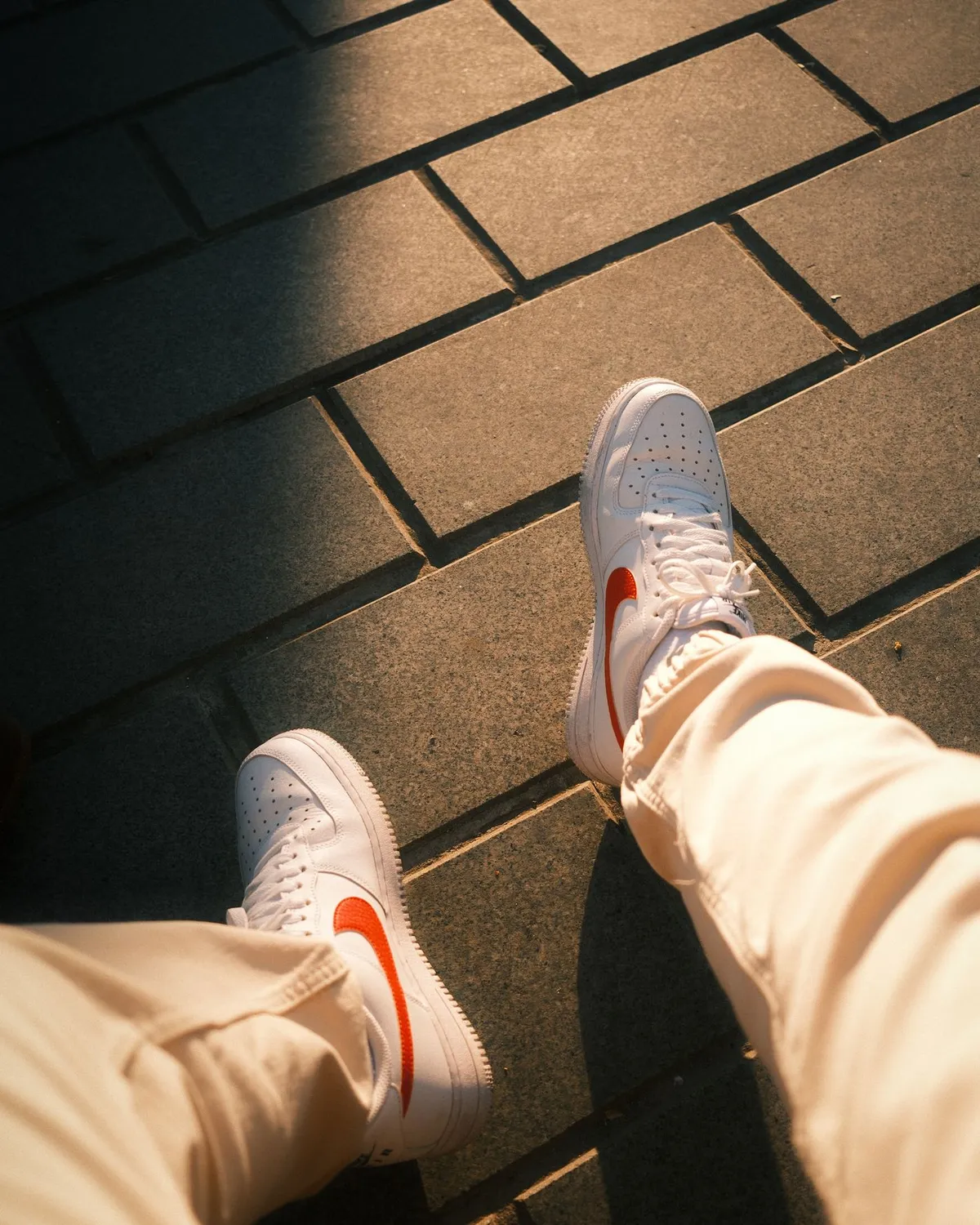
White sneakers are often described as the easiest shoe in a wardrobe. The description becomes more useful once you specify the wardrobe: straight jeans, a casual dress, trousers for an office without a formal shoe requirement. A pair that works with those clothes can be a sensible purchase, but familiar color and shape do not tell you everything about how the shoe will fit or what care it will need.
Begin with the pair you are replacing, if there is one. Write down what worked and what did not: the height of the upper, the amount of room at the toes, the visual bulk under trousers, the difficulty of keeping the finish tidy. This turns a broad search for white sneakers into a much shorter list of practical requirements.
Read the white in the photograph carefully
A bright white upper and a cream sole create a different effect from an all-white pair. Compare the shoe with the white or cream pieces you actually wear. You do not need every shade to match, but it helps to choose the contrast intentionally, particularly if your wardrobe contains many soft neutrals.
Look beyond the side view. The top-down photograph shows the toe shape you will see most often, while the rear view reveals heel details that may become a focal point under cropped trousers. Large logos, contrasting panels and decorative stitching can make a pair less visually quiet than its search-result thumbnail suggests.
Separate fashion use from specific activity
A lifestyle sneaker is not automatically a running, hiking or court shoe. If you are shopping for a particular sport, use footwear described for that activity and investigate the relevant specifications separately. For this purchase, define the everyday use you expect: errands, a commute, casual office days or a short city visit.
Try the sneaker with your normal socks on a clean indoor surface. Lace both shoes rather than assessing one loosely fastened pair. Walk, turn and notice heel movement, toe space and where the upper bends. Follow the retailer’s return rules and do not assume that a material will stretch enough to correct a fit you already dislike.
| Preference | Look closely at | Potential compromise |
|---|---|---|
| A quiet finish beneath tailoring | Low-profile shape and restrained details | Less of the chunky visual contrast you may like |
| A substantial shoe with wide jeans | Overall sole and upper proportions | A larger silhouette to pack |
| A simple cleaning routine | The actual care instructions | Your favorite finish may require extra care |
| Warm-weather casual outfits | Material and lining description | A photograph cannot establish how it will feel |
Buying checklist
- Read the upper, lining and sole materials for the exact style.
- Compare the brand’s sizing guidance with your current shoes, without assuming sizes transfer perfectly.
- Try both shoes with the socks you expect to wear and lace them properly.
- Check the toe outline and sole height with at least two ordinary outfits.
- Inspect the care instructions before deciding how you will clean them.
- Check whether the return policy allows your intended indoor try-on.
- Avoid final-sale ordering if fit is unresolved and returns matter to you.
Nordstrom offers a range of sneaker silhouettes, while Everlane is another place to compare everyday styles. Use each current product page for the details of the pair under consideration. Do not transfer one model’s materials or care recommendations to another simply because both appear under the same brand or retailer.
Tradeoffs
A smooth upper may be easier to wipe in some circumstances, but cleaning depends on its material and finish. Fabric can suit the relaxed look you want, yet marks and laundering rules need attention. Never assume that a white sneaker is machine-washable; the stated care instructions should determine the method.
A chunky sole may balance a long trouser hem visually. It can also make the shoe feel larger than you want with a skirt or slim jeans. Photograph the pair with your clothes during a permitted try-on, then evaluate those combinations together. A shoe should not require a different set of trousers just to justify the purchase.
Think about replacement rather than perfection
White shoes will change with wear. Decide whether a lightly worn appearance suits your style or whether you are willing to maintain a particularly crisp finish. If the latter, include the time and any recommended care supplies in your decision.
Should I own two nearly identical pairs? Only if the first is regularly unavailable because of drying, cleaning or a distinct use. Otherwise, another pair may duplicate the same role.
Can they work for dinner? Check the venue’s actual dress expectations and your outfit. A simple sneaker may fit a casual evening, while a more formal event can call for another shoe. Let the real invitation make that decision.