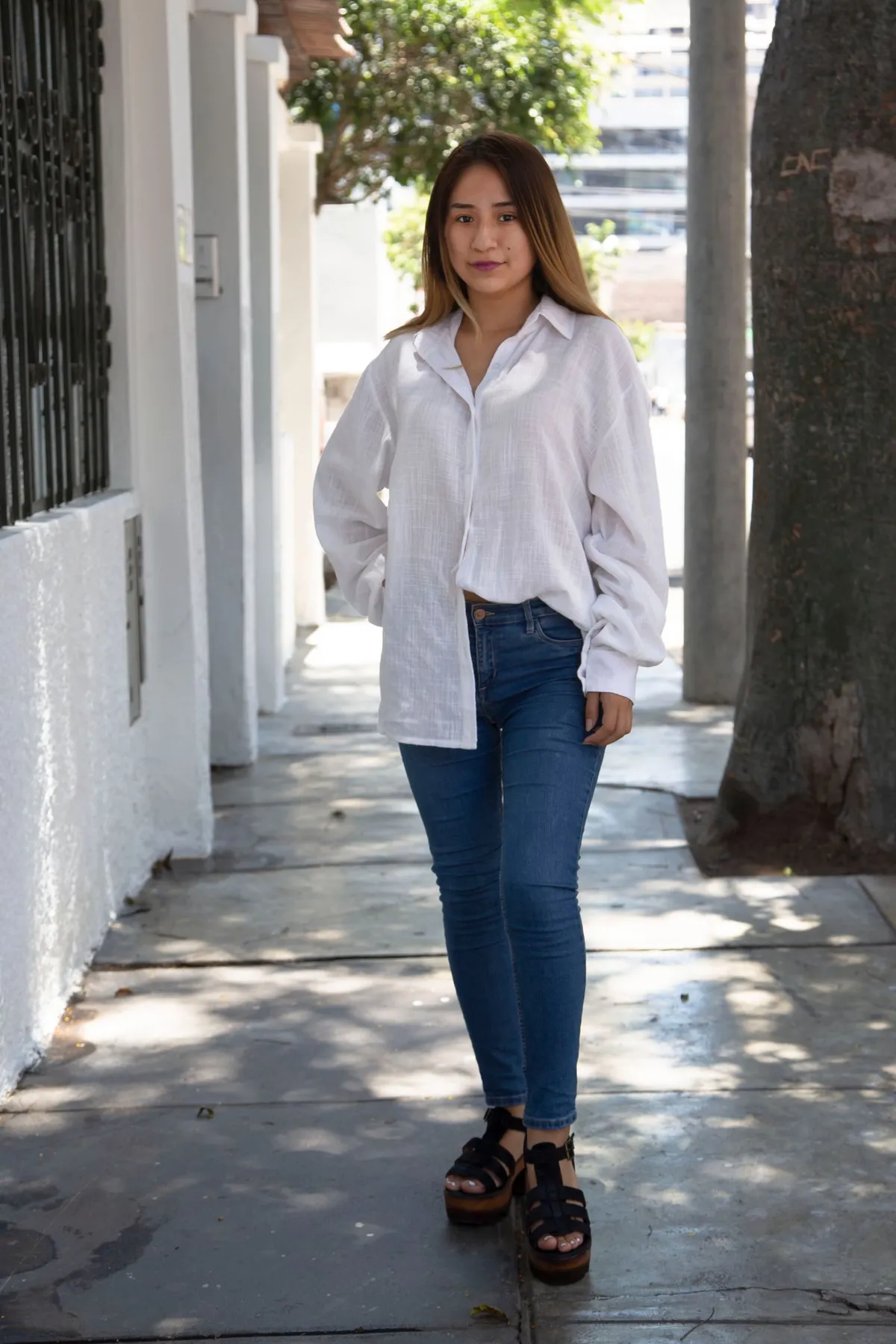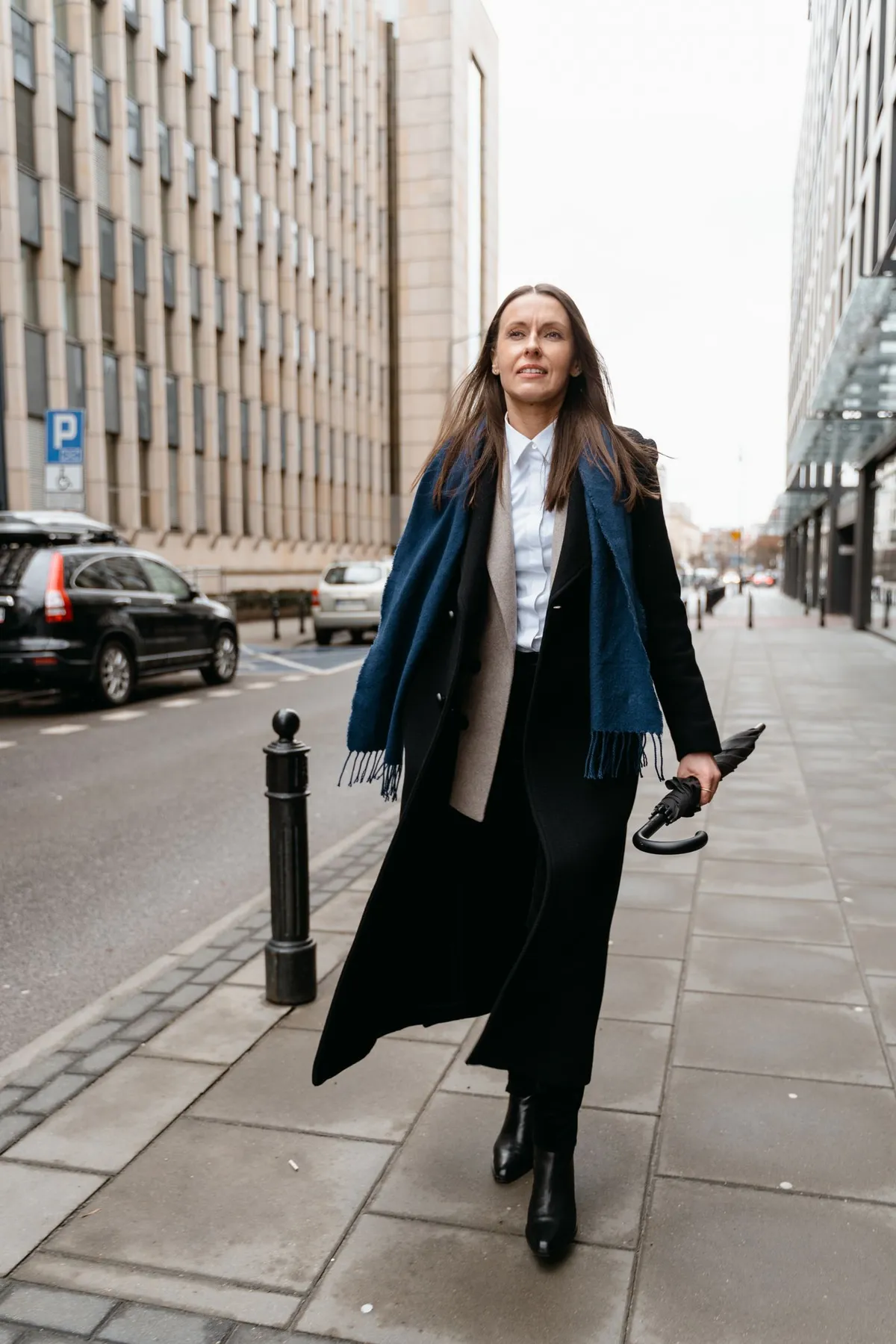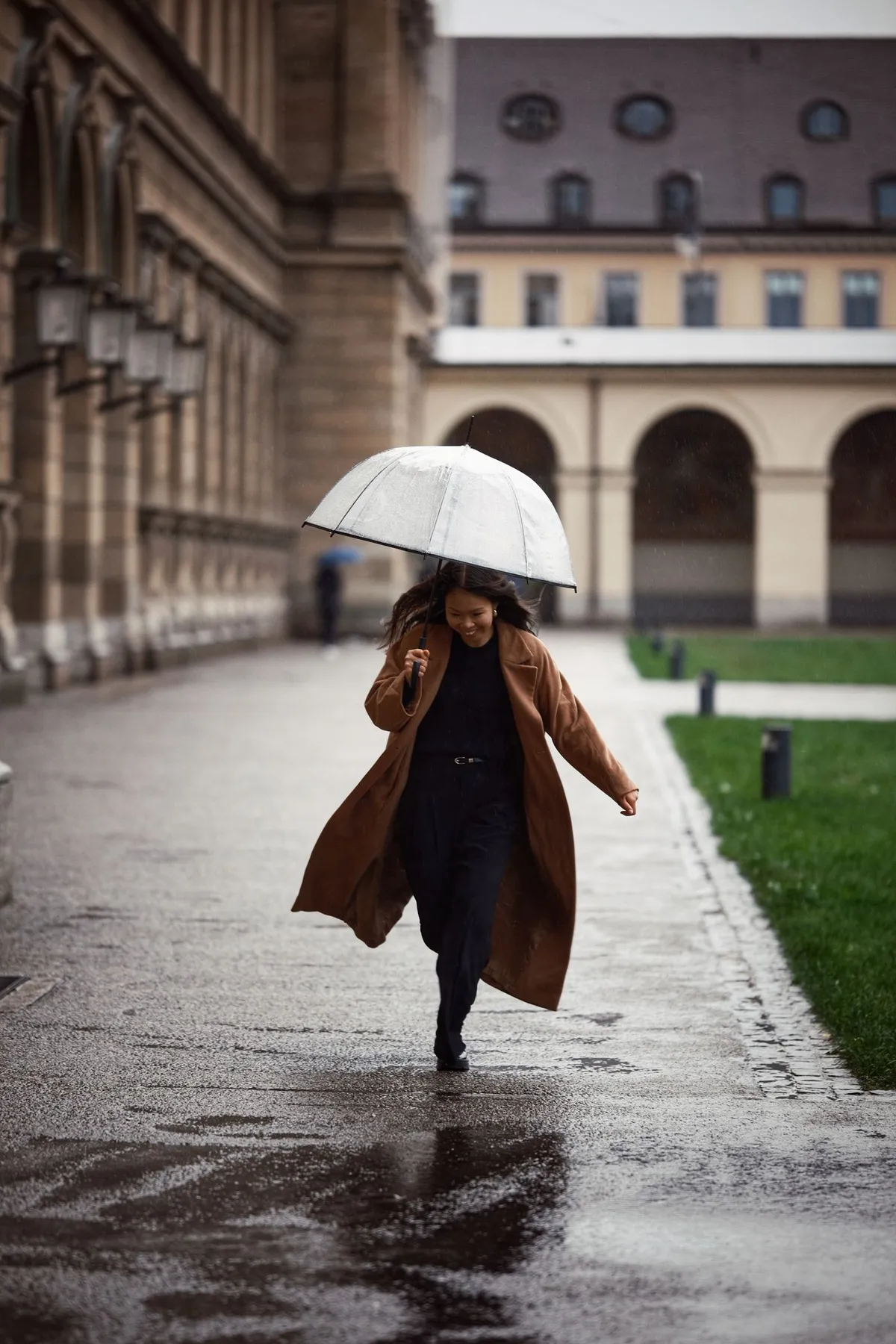
The forecast says rain, but your day still includes a train ride, a heated office and dinner somewhere that does not have a place for a dripping coat. Dressing for that sequence works better than dressing for a weather icon. Start with the part of the outfit that will be visible indoors, then give it a protective outer layer and shoes suited to the route.
The useful formula is simple: an easy base, a coat that closes properly, trousers that clear the pavement and a bag you can carry while holding an umbrella. None of those pieces needs to be new. Lay out what you own before deciding that rain requires a separate wardrobe.
Build an indoor outfit first
A cotton shirt with straight trousers makes a reliable starting point for a casual office. If you prefer a knit, choose a layer that can be removed without changing the whole outfit: a cardigan over a tee, for example. A heavy sweater may feel right outside and uncomfortable once you sit beside a radiator.
For a weekend version, try straight jeans and a long-sleeve top with a light cardigan. Leave enough room under the coat to bend your elbows and carry a bag. Tight sleeves become more annoying when the fabric underneath has absorbed moisture.
The tradeoff is warmth versus flexibility. One thick layer reduces the number of things to carry, but two lighter ones give you more control indoors. Choose for the longest part of the day, not the shortest walk.
Check the coat instead of trusting its shape
A trench-style coat can look appropriate for the office without being suitable for sustained rain. Read the retailer’s actual description: water-resistant and waterproof are different claims, and a familiar silhouette does not establish either. Look at the fastening, hood, pockets and care instructions as well as the photographs.
If you already own a coat that handles light showers, a compact umbrella may be the only addition you need. For a longer exposed walk, prioritize the weather protection stated by the manufacturer. A belt is useful only if it does not keep loosening or trail in the puddles when the coat is open.
Give your hems some breathing room
Wide-leg trousers can work in the rain if the hem clears the ground with the shoes you are actually wearing. Check this combination at home. A pair that is the perfect length with heels may drag when paired with flat boots.
On a wet commuting day, a slightly shorter straight leg can be easier to manage than a very long, fluid trouser. That is a practical choice rather than a rule about body shape. If you wear a skirt, think about the gap between the hem and the top of your boots, and whether sitting down will expose damp fabric against your legs.
Choose shoes for the surface
The right shoe depends on the pavement, distance and manufacturer’s guidance. Check the sole, closure and material care rather than assuming that any boot is waterproof. Smooth soles and wet stone are an awkward combination; decorative suede also asks more of your care routine than a finish intended for changing weather.
If you change into office shoes, keep the second pair at work where possible. Carrying them every morning may defeat the purpose of a light commuting bag. Allow damp shoes to dry according to their care instructions, away from direct heat unless the maker says otherwise.
Buying checklist
- Try the coat over your thickest likely indoor layer and sit down in it.
- Check trouser length with your rain-day shoes, not a taller alternative.
- Confirm that the bag closes and that its care guidance suits wet weather.
- Read the stated rain protection and return conditions on the individual product page.
- Buy the missing function first: protection, comfortable walking or a layer you can remove.
Where to start looking
Uniqlo is a starting point for everyday layers; Nordstrom offers multiple brands to compare for outerwear and footwear. Use the retailer links below as browsing destinations, then check each item’s materials, protection claims, sizing and current availability. The photograph here is styling context, not a retailer product image or an endorsement by the person pictured.
Tradeoffs: protection without carrying a second wardrobe
A more protective coat can be bulkier to carry indoors; a lighter one needs an umbrella and a shorter exposed walk. Likewise, a second pair of shoes solves an office dress-code problem but adds weight to your bag. Decide which inconvenience happens most often. Buying both options is useful only if each has a real job in your week.
A small evening adjustment
Once you arrive, hang the outer layer where it can dry, smooth the shirt and remove the extra cardigan if the room is warm. An outfit that still looks considered after the coat comes off is the real goal. If your evening plans are uncertain, a simple base with one detail you enjoy—earrings, a scarf or a textured knit—will ask less of you than a complete change.